
The image is a familiar one: a screensaver-perfect shot of a beautiful lagoon, a single palm tree swaying in the breeze, and the promise of a life lived at a slower, more deliberate pace. For many, Rarotonga isn’t just a holiday destination; it’s the ultimate escape fantasy, a place to trade traffic jams and deadlines for ocean views and tropical tranquillity. It’s easy to fall in love with the island during a week or two of blissful vacation. But what happens when the holiday ends and the reality of a permanent move begins?
The good news though? We’ve done it twice!
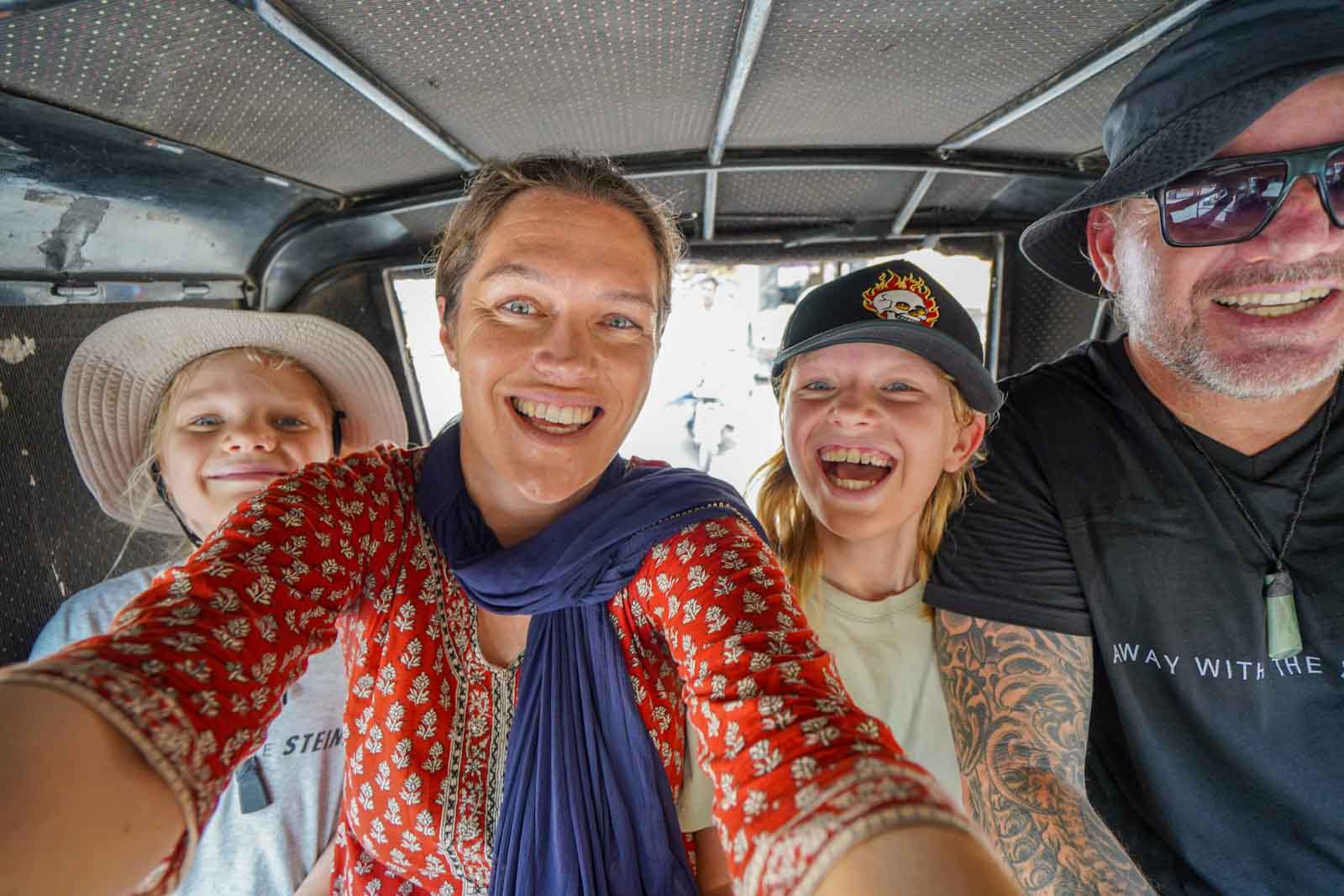
We are a travelling family from New Zealand – Away with the Steiners – settling in the Cook Islands for the second time.
This is our second time moving to Rarotonga as a family; and call us bias. But we always reaffirm that moving to Rarotonga is one of the best decisions we’ve ever made!
We’ve got all the deets about real island life, packing, shipping, health checks, renting a house, buying a car. Plus all those questions that really do come with taking the next step of moving to Rarotonga.
Read all about:
- PART 1 – Moving to Rarotonga, Cook Islands
- PART 2 – Navigating Health Checks for Your Move to Rarotonga
- PART 3 – Shipping for Your Move to Rarotonga
- PART 4 – Finding and Renting a House in Rarotonga
- PART 5 – Buying a Car in Rarotonga
Thinking About Moving To Rarotonga?
Moving to a remote island is a monumental decision, a life-altering choice that requires looking beyond the postcard-perfect beaches. It’s an act of faith and a leap of courage, but it must be grounded in practical thought.
The truth is, paradise living comes with its own unique set of challenges, and the key to a successful transition isn’t just a love for the sun—it’s a deep understanding of the everyday realities.
Before you pack your bags, sell your furniture, and book a one-way ticket. It’s crucial to ask yourself some serious questions that will determine whether your Rarotonga dream will flourish or fade.
Hey! We are Away With The Steiners. Wondering about living in Rarotonga, Cook Islands?
Some First Thoughts First
You see that first photo? That is of our kids welcoming Nana for her first trip to Rarotonga; the second time we have moved to live here! It is an incredible life, culture and community that we are blessed to make home again.
Thinking about moving to Rarotonga is the first exciting step toward a life-changing adventure in paradise. This stunning island offers a unique opportunity to trade the fast-paced world for a simpler, more connected existence surrounded by incredible natural beauty.
To ensure this dream becomes a happy and sustainable reality, it’s worth taking a moment to ask yourself a few thoughtful questions. By exploring topics like your work opportunities, housing options, and how you’ll embrace the laid-back ‘island time’ rhythm, you’re not creating roadblocks, but building a solid foundation.
These questions are your roadmap to a successful and joyous transition, helping you to confidently plan a future where every day feels like a step closer to your dream life.

1. What are the Visa and Residency Requirements?
This is the first and most critical question. As a small, sovereign nation, the Cook Islands have their own laws regarding who can live and work on the island.
While you may enter as a tourist for up to 31 days (or more, depending on your nationality). Long-term residency and work permit that equate for moving to Rarotonga are a different matter.
You’ll need to contact the Cook Islands Ministry of Foreign Affairs and Immigration to understand the specific requirements for your situation and to obtain the correct documentation before you arrive.
What are the visa requirements for working in and living in Rarotonga? How long can I stay in Rarotonga for on a standard visitor or tourist visa?
2. What is the job market like for my profession?
Rarotonga’s economy is heavily reliant on tourism and government services. Jobs in other sectors can be scarce, and competition is often high for skilled positions. It’s highly advisable to secure a job or a business venture before you make the move.
Job opportunities, especially in skilled professions, are limited and often require a work permit, a process that can be complex. Don’t be fooled by the laid-back vibe; the small business community is tight-knit and competitive.
You must have a solid plan for how you will support yourself, whether through a pre-arranged job, a portable remote income, or if you have solid Cook Islands connections, though a well-capitalized business venture.
What is the job market like in Rarotonga? Where are jobs in Rarotonga advertised?

3. How does the cost of living compare?
While the relaxed lifestyle might suggest a lower cost of living comes with moving to Rarotonga. But (sorry); this isn’t always the case.
Imported goods, including petrol and diesel, vehicles, and many groceries, are significantly more expensive than in New Zealand or Australia. Though conversely, fresh, local produce from roadside stalls and the Punanga Nui Market is often affordable.
You’ll need to create a realistic budget that accounts for these differences. Plus, you will need to get onto learning about supermarkets in Rarotonga and the places to look for what it is that you are after.
What is the cost of living? Will you be able to embrace a lifestyle with fewer immediate conveniences, where you can’t just run to a giant supermarket for every item on a whim?

4. What is the healthcare system like in Rarotonga?
The Cook Islands, including Rarotonga, have a healthcare system overseen by Te Marae Ora (Cook Islands Ministry of Health). Rarotonga has the most comprehensive medical services, with a main hospital in Avarua, community health clinics, several dental services and some private practitioners.
The Rarotonga Hospital in Avarua can handle most common medical needs. However, for serious emergencies, complex surgeries, or specialized care, patients are often evacuated to New Zealand. For this reason it is impertative to make sure that your work contract – or travel insurance as a visitor – includes medical evacuation.
Is there a hospital in Rarotonga? What health services are available?

5. What are the housing options and costs for renting a house in Rarotonga?
The housing market on Rarotonga is small and competitive, especially for long-term rentals. Many properties are found through local connections and word-of-mouth rather than online listings.
If it fits, it’s a good idea to visit the island first and spend time networking to find a suitable place before moving to Rarotonga.
Consider whether you want to rent a house, a unit. Or if you have Cook Islands connections, buy land and build – each option comes with its own unique set of considerations and costs.
Is it easy to rent a house in Rarotonga? How much does it cost?

6. How is the internet and cellular service in Rarotonga?
If you are planning on moving to Rarotonga to work remotely, this is a top priority.
Albeit internet service on the island is available through major providers like Vodafone or Starlink. But hooking up WIFI on the island can be more expensive and slower than you may be used to.
Data plans are often capped, and unexpected outages can occur. So do be prepared for a potentially (and blissfully) more digital ‘unplugged’ lifestyle. Though also have a backup plan for your work!
The first time we moved to Rarotonga we used Vodafone for WIFI in our home. But this time we have moved on with Starlink. Which so far; we are firm recommenders of!
Will WIFI be available? At what speed? And how much does it cost to get internet and mobile in Rarotonga?

7. What are the education options for my children if moving to Rarotonga as a family?
Education in Rarotonga, the largest and most populous island of the Cook Islands, is a fascinating blend of traditional values and modern curricula, deeply tied to the New Zealand education system.
But are you looking at moving to Rarotonga? We get the priority to check out the schooling for your kids! And the good news? We’ve done it twice!
There are 12x Registered Schools on Rarotonga, 11x Preschools (for children under the age of 5 years old) and 3x Daycare options.
The schools on Rarotonga consist of government established Primary and Secondary Schools, Church Schools and Private Schools. The term ‘private’ is used to denote a non-government school that is neither owned nor operated by a religious organisation.
By the way; our children go to Apii Nikao – a government school in Nikao, near Avarua in Rarotonga. We really rate it!
What are schools in Rarotonga like? Which school will my kids go to?
8. What’s the weather like and what about natural disasters?
Rarotonga has a tropical climate with a wet season (November to April) and a drier, cooler season (May to October).
The wet season is also the cyclone season. It’s important to be aware of the island’s vulnerability to extreme weather and to understand the community’s readiness plans. This will also impact your choice of housing and how you prepare your home.
Plus – it is another reminder to be particularly aware of mosquitos and Dengue Fever during the wet (mosquito) season.
What is the weather really like living in Rarotonga?

9. How do I get my belongings to the island?
Shipping your belongings moving to Rarotonga can be a complex, costly, and time-consuming process. Many people find it easier to sell most of their possessions and arrive with just what they can fit into their luggage.
But if you do choose to ship, you’ll need to hire a reputable shipping agent and be patient with the timeline and customs processes.
However, for most government jobs in Rarotonga there is an allowance for shipping. (We’ve done that twice too!). Each time we have moved to Rarotonga we have had a shipping allowance to move some freight for our family.
Is it possible and financially practical to ship some things to Rarotonga?

10. How do I integrate into the local community and culture?
The transition to island life is not just physical but also cultural. With the best way to make a successful move is to be respectful and embrace the local way of life…
Embrace it! Learn some basic phrases in Cook Islands Māori. Get to know your neighbours and participate in community events.
Understanding and respecting the island’s unique customs, traditions, and pace of life will be key to a happy and fulfilling experience. The truth is that it is an incredibly special place to live and we still pinch ourselves regularly (even the second time round) that we call Rarotonga, HOME.

Hey! We are Away With The Steiners. Wondering about Living in Rarotonga, Cook Islands?
What Do You Think About Moving? Tempted?
Moving to Rarotonga is an incredible journey that promises a rewarding lifestyle far removed from the hustle of city life.
By asking these questions and doing your homework, you can ensure that you’re well-prepared for the transition and ready to fully embrace everything this beautiful island has to offer. Kia Manuia!
Read More About Travel to Rarotonga
- All About The Rarotonga Bus.
- 10 Unforgettable Walks In Rarotonga.
- 10 Historical Sites You Must See In Rarotonga.
- Hiking The Needle Cross Island Walk.
- Hiring A Bike In Rarotonga.
- How To Get Your Scooter License In Rarotonga.
- 15 Essential Tips On Visiting Rarotonga.
- Rarotonga Reef Explorer Tour With Ariimoana.
Travel Planning for Cook Islands and Beyond
These are the companies we use while traveling as a family and that we would recommend to anyone planning and booking travel.
- Booking.com – The best all-around accommodation booking site that constantly provides the cheapest and lowest rates. They have the widest selection of budget accommodation and it’s easy to filter and sort into price and availability with all the extras you are looking for personally.
- Skyscanner– This is by far our favourite flight search engine. They are able to search small websites and budget airlines that larger search sites often miss. We book all our flights through Skyscanner.
- GetYourGuide– Get Your Guide is a huge online marketplace for tours and excursions offered all around the world. Everything from walking tours, to street-food tours, cooking classes, desert safari’s and more!
- SafetyWing – A global travel insurance that covers people from all over the world while outside their home country. You can buy it short or longterm; and even if you are out of the country.
- World Nomads – Travel insurance tailored for longterm travel and nomads including those who have already left home. Make sure you have travel insurance before travelling to the Cook Islands!

Hi! I’m Sarah. I am the self-confessed dreamer, travel-schemer and the main editor behind this blog. I love to write, and it is a dream come true to share so many experiences together and inspire others in our stories.