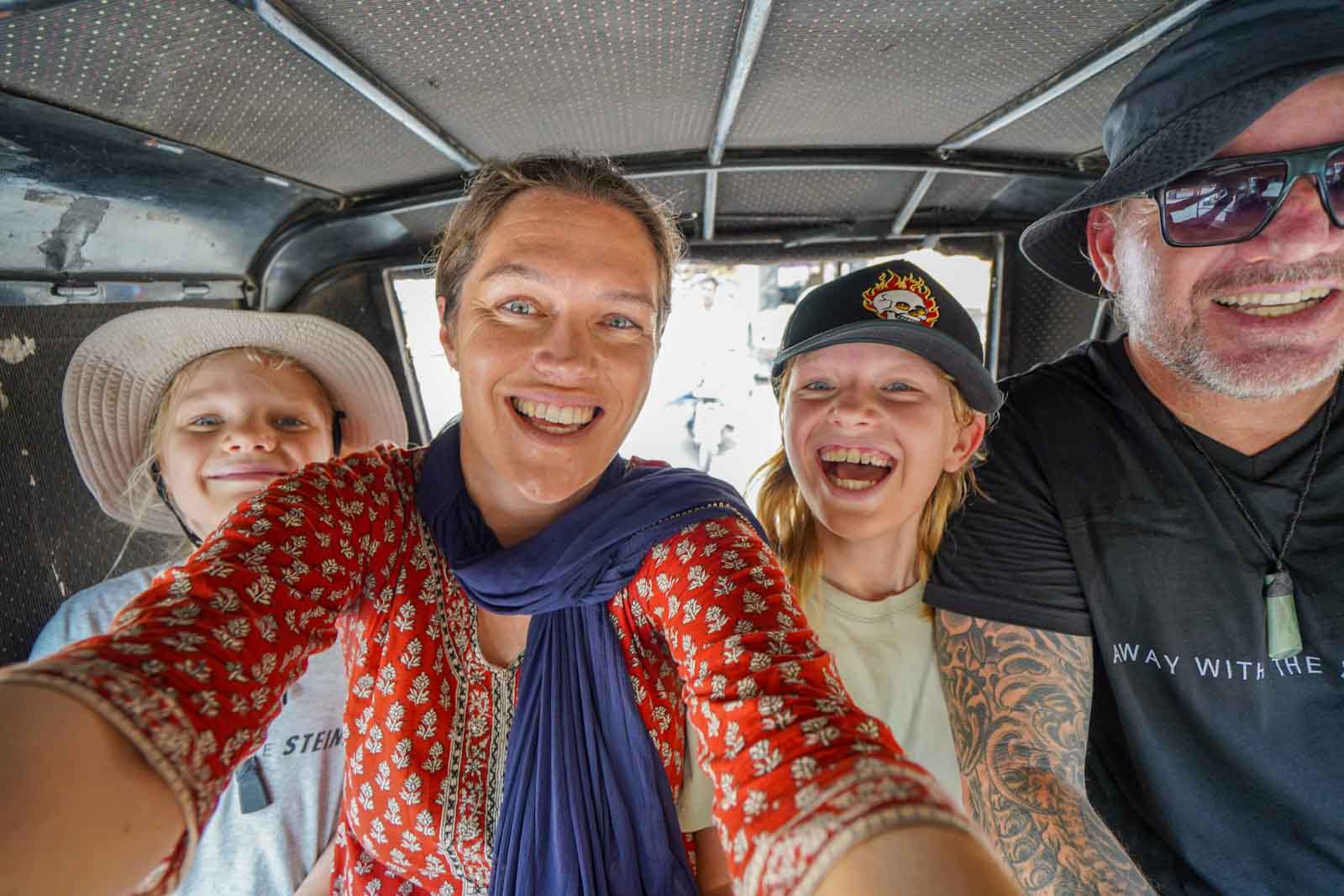

From a distance, life in Rarotonga – the jewel of the Cook Islands – might look like a picture-perfect paradise. With its beautiful lagoons, lush volcanic peaks, and swaying coconut palms, it’s a destination that captivates the imagination. But beyond the postcard-perfect images, what is the reality of living on this 32-kilometre-round island? There must be pros and cons, right?
For those considering a permanent move, it’s a decision that involves a delicate balance of lifestyle benefits and practical challenges. There absolutely are pros and cons to life in Rarotonga.
But the good news?
This is our second time living in Rarotonga and calling the Cook Islands ‘HOME’ as a family.
So not only can we share with you all about moving to Rarotonga. But we also have all the deets about packing, shipping, working, schooling, renting a house in Rarotonga – and buying a car!
Read all about:
- PART 1 – Moving to Rarotonga, Cook Islands
- PART 2 – Navigating Health Checks for Your Move to Rarotonga
- PART 3 – Shipping for Your Move to Rarotonga
- PART 4 – Finding and Renting a House in Rarotonga
- PART 5 – Buying a Car in Rarotonga
Otherwise, read on. Because here we share the honest truths about living in Rarotonga.
About the Pros and Cons – Living in Rarotonga
The following is our personal opinion on what constitutes a pro or con for life in the Cook Islands. This is of course influenced by our own setup, our experience as a travel family – from New Zealand – and our situation in terms of family life, financial status and personal preferences.
As you make your way through the list, some of our pros might seem like cons to you, and vice versa. This is our personal – and honest – reflection of making the move (twice) to call Rarotonga, home.
In any case, we hope this post will give you some idea of what’s good and what’s not so good about life in the Cook Islands.
Hey! We are Away With The Steiners. Wondering honestly about Living in Rarotonga, Cook Islands?
The Allure of Paradise: The Pros
The Climate – Living in Rarotonga
One of the most significant draws is, without a doubt, the weather. Rarotonga enjoys a pleasant, warm, and sunny climate year-round.
The drier, cooler season from April to November is idyllic, with average temperatures around 26°C. Even the warmer, wetter season from December to March, with its higher humidity, is characterized by brief, heavy tropical showers that quickly give way to sunshine, leaving behind a vibrant, lush landscape.
This consistent warmth means a lifestyle centred around the outdoors—swimming, snorkelling, and hiking are not just weekend activities but part of daily life.
The Pace of Life – Living in Rarotonga
Albeit the concept of the ‘tropical dream’ extends far beyond the climate. It’s about a fundamental shift in pace. Life here is slower and more intentional.
The island’s laid-back atmosphere is contagious, fostering a sense of calm that can be a welcome escape from the pressures of modern life. This is deeply intertwined with the culture of the Cook Islands, which is rich in tradition and community.
The Cook Islands Māori culture is vibrant, celebrated through music, dance, and a strong emphasis on family and community gatherings. Visitors and new residents alike are often welcomed with open arms, quickly becoming part of the local fabric. This is one of the best ‘pros’ of life in Rarotonga!

The People
This sense of community is amplified by the friendly people. Rarotongans and Cook Islanders are known for their warmth, generosity, and genuine smiles. It’s an environment where people wave as they pass you on the road, where neighbours look out for one another, and where a stranger will stop to offer help.
This social connectivity and deep sense of belonging can be incredibly rewarding.
Schooling – Pros of Living in Rarotonga
For families, the schools on the island offer a unique educational experience. The education system is closely tied to New Zealand’s, with primary and secondary education being free and compulsory for children aged 5 to 15. Early childhood education is also available with 9 preschools on the island for children aged 3 to 5.
There are government, church, and private schools. Many of which use a curriculum based on a blend of the Cook Islands and New Zealand national curricula. This ensures a quality education in a close-knit, supportive setting, often with smaller class sizes and a strong focus on cultural values alongside academic subjects.
Our children go to Apii Nikao – a government school in Nikao on the north of the island. And did you know that I am a teacher? We love it and can rate the sense of community, culture and experience that our kids have had at school while living in Rarotonga!

The Cost of Living – Pros of Living in Rarotonga
Finally, the cost of living can be seen as a pro, particularly for those coming from major metropolitan cities in Australia or New Zealand. (Though I am going to be honest that I have also listed this as a complex con further down below, too!).
While certain imported goods are expensive because of the cost of getting things to a tiny island in the Pacific. But daily essentials like fresh local produce can be affordable if you shop at local markets and roadside stalls.
Rent for a modest home can also be more reasonable than in many urban centres in New Zealand, allowing for a more financially relaxed existence for some. Though read on below because this is a complex part of living in Rarotonga…

The Reality of Paradise: The Cons
The Weather – Living in Rarotonga
Albeit the very factors that make Rarotonga a paradise can also present challenges. The weather, while often glorious, has a downside too.
The wet season, from December to March, brings not only humidity but also the risk of tropical cyclones. While serious cyclones are rare. The threat is a constant consideration and can disrupt life and travel plans. The high humidity can also be a struggle for those unaccustomed to it.

The Cost of Living
The cost of living is a particularly complex issue, appearing on both sides of the ledger. While a relaxed pace and affordable(ish) housing can be a pro, the cost of imported goods, fuel, and certain services is significantly higher than in many other countries.
Plus, right now (2025) with the increase of tourism to the Cook Islands, there is a narrowing shortage of rental houses for expats. This is tied into the rise of AirBnB and short-term accommodation options. Which as a resident, does make it challenging!
Groceries, especially packaged and frozen foods imported from New Zealand, can be eye-wateringly expensive. Things like cheese or yoghurt cost a lot more than what you would pay at home.
So, a simple weekly grocery shop can easily exceed what one would spend elsewhere, making budgeting a serious consideration.

Food Options (& Cost) – Cons of Living in Rarotonga
The cost of living here also ties directly into the challenges with food options and cost.
While fresh fish and local fruits and vegetables from the Punanga Nui Market are a delight, the variety of food is limited.
Dining out at Western-style restaurants can be costly, and the options are not as diverse as in a larger city. So, for those who enjoy a wide range of international cuisine and a variety of dining experiences, Rarotonga’s food scene may feel restrictive over time.
But there are five main supermarkets spread around the island. Which once you get to know, you will start to find favourites and treats that you hunt for at the particular shop.
Yes; there are times when you drive to the other side of the island because there is only one place left with eggs!

The Location – Cons of Living in Rarotonga
Finally, the island’s location is both a blessing and a curse. This is one of the pros AND cons of living in Rarotonga! While its remoteness is key to preserving its unique charm and peaceful environment, it also creates significant logistical challenges.
The limited flight options to and from the island can be a major con. There are currently flights to Rarotonga from Auckland, Sydney, Tahiti (French Polynesia) and Hawaii. But flights, primarily from New Zealand, Australia, and a few other Pacific destinations, can be expensive. Particularly during peak tourist season (or the New Zealand school holidays!).
This makes spontaneous travel difficult and can be a hurdle for those who need to travel frequently for work or to visit family abroad. Or if you are a travel family like us! The journey itself can be long, and once you’re on the island, you’re quite a distance from the rest of the world.
Hey! We are Away With The Steiners. Wondering about living in Rarotonga?

Summing Up; Is Life in Rarotonga More Pros or Cons?
There’s no doubt about it. Life is Rarotonga is pretty amazing and the pros far, far outweigh the cons.
But living in Rarotonga is a trade-off. It’s an exchange of convenience for community. Of a fast-paced career for a slow-paced life, and of limitless choices for a more intentional, simplified existence. The decision to call this island home is a personal one.
Life in Rarotonga might not be perfect. But, for us, it comes pretty darn close…
Read More About Travel to Rarotonga
- All About The Rarotonga Bus.
- 10 Unforgettable Walks In Rarotonga.
- 10 Historical Sites You Must See In Rarotonga.
- Hiking The Needle Cross Island Walk.
- Hiring A Bike In Rarotonga.
- How To Get Your Scooter License In Rarotonga.
- 15 Essential Tips On Visiting Rarotonga.
- Rarotonga Reef Explorer Tour With Ariimoana.
Travel Planning for Cook Islands and Beyond
These are the companies we use while traveling as a family and that we would recommend to anyone planning and booking travel.
- Booking.com – The best all-around accommodation booking site that constantly provides the cheapest and lowest rates. They have the widest selection of budget accommodation and it’s easy to filter and sort into price and availability with all the extras you are looking for personally.
- Skyscanner– This is by far our favourite flight search engine. They are able to search small websites and budget airlines that larger search sites often miss. We book all our flights through Skyscanner.
- GetYourGuide– Get Your Guide is a huge online marketplace for tours and excursions offered all around the world. Everything from walking tours, to street-food tours, cooking classes, desert safari’s and more!
- SafetyWing – A global travel insurance that covers people from all over the world while outside their home country. You can buy it short or longterm; and even if you are out of the country.
- World Nomads – Travel insurance tailored for longterm travel and nomads including those who have already left home. Make sure you have travel insurance before travelling to the Cook Islands!

Hi! I’m Sarah. I am the self-confessed dreamer, travel-schemer and the main editor behind this blog. I love to write, and it is a dream come true to share so many experiences together and inspire others in our stories.