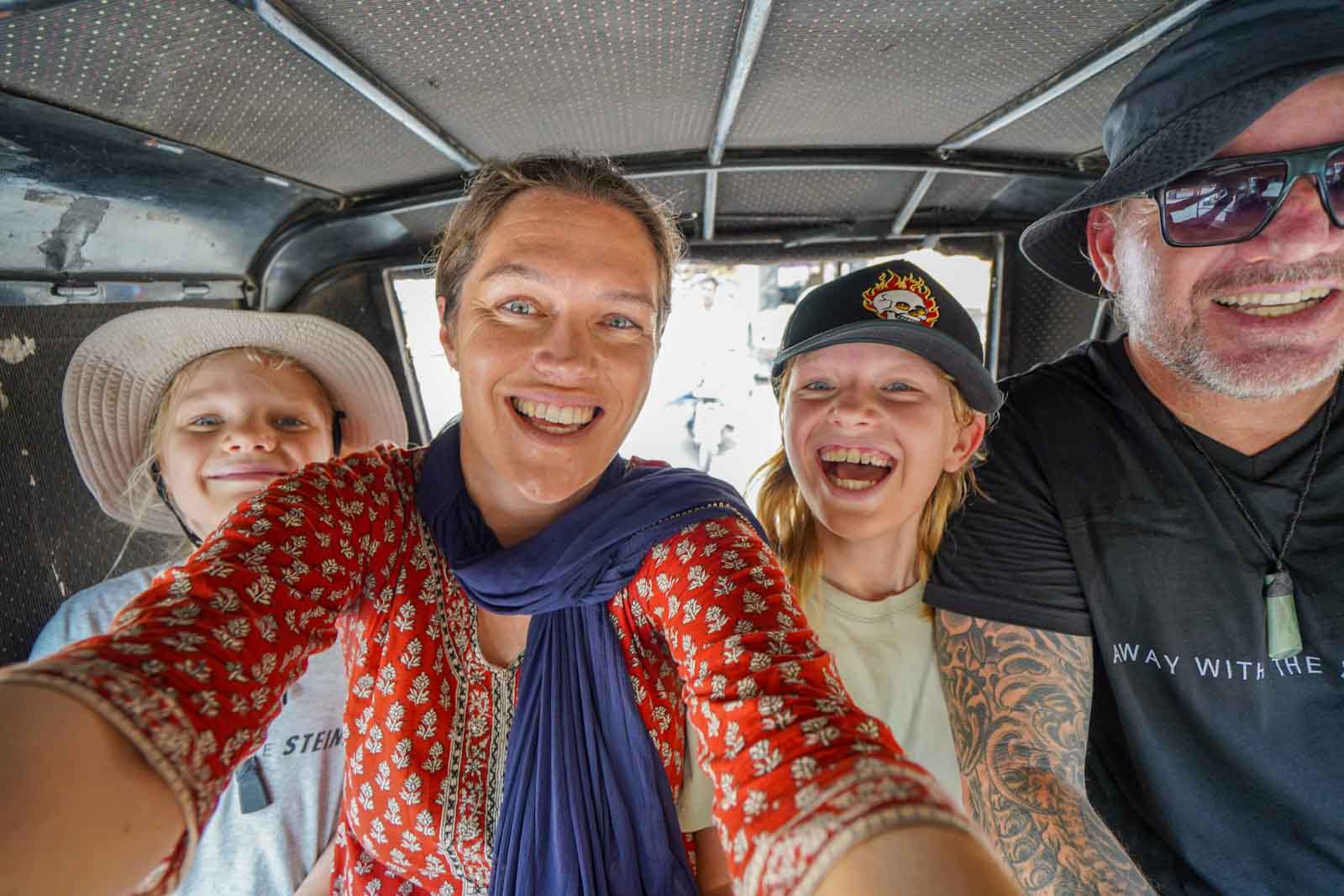

Whenever you mention you’re heading to the Cook Islands on holiday, the typical response is, “Oh, how lucky!” And albeit, while Rarotonga certainly has its share of waterfront resorts and beautiful high-end dining, there is a misconception that it is an island for luxurious-only holidays. We’re here to tell you that’s simply not true. It is doable to enjoy an incredible experience backpacking Rarotonga too!
Having spent literally the last six years traveling all around the world fulltime backpacking on a budget, we’ve now moved to Rarotonga. We live here! So having spent a significant amount of time both backpacking and exploring this stunning paradise, we’ve found that with a little bit of planning and a willingness to embrace a more local style of travel, backpacking Rarotonga on a budget is not only possible but is also an incredible way to experience the island.
This guide, updated for 2026, is for all the budget-savvy adventurers out there who dream of white-sand beaches, crystal-clear lagoons, and warm, welcoming people without draining their savings. We’ll cover everything from accommodation and food to transport and free activities, proving that Rarotonga is an island for everyone.
Ready to go backpacking Rarotonga?
Hey! We are Away With The Steiners. Wondering about living in Rarotonga, Cook Islands?
Getting There: Backpacking Rarotonga
The Cook Islands are accessible via direct flights arriving at Rarotonga International Airport (RAR) from several key hubs.
New Zealand serves as the main gateway, with Air New Zealand and Jetstar offering frequent direct flights from Auckland. For Australian travellers, Jetstar operates direct services from Sydney, making the journey convenient.
The islands also maintain strong links across the Pacific. Hawaiian Airlines provides direct weekly flights from Honolulu (USA), creating an excellent option for North American travellers. Furthermore, the short hop from French Polynesia is serviced by Air Rarotonga and Air Tahiti, with direct routes from Papeete. These routes make the Cook Islands an ideal stop on a wider Polynesian itinerary.
If you’re coming from further afield, connecting flights can be made in New Zealand and Australia with a transit through Auckland or Sydney.
When to Visit?
Rarotonga has a tropical climate with two seasons:
- Dry Season (May to October): This is the most popular time to visit. The weather is cooler (around 25°C), less humid, and has less rain. The gentle trade winds keep things comfortable. It’s the ideal time for outdoor activities, beach days, and exploring.
- Wet Season (November to April): The weather is hotter and more humid, with a higher chance of tropical downpours. However, these are usually short, and they often lead to some of the most beautiful sunsets. The benefit of visiting during this time is that prices for flights and accommodation are often lower, and the island is less crowded.
The Cheapest Time to Visit
The cheapest season to visit the Cook Islands is during the low season, which generally aligns with the South Pacific wet season from December to March.
During this period, tourist numbers drop significantly, especially outside of the Christmas/New Year holidays. Consequently, you can find the most substantial savings on travel essentials:
- Accommodation: Resorts and rentals often offer their lowest ‘wet season’ rates and special deals (like ‘pay for four nights, get one free’).
- Flights: Airfares from primary gateways like New Zealand and Australia tend to be at their most competitive.
While the weather is hotter, wetter, and more humid, rain typically falls in short, intense bursts, leaving plenty of sunny hours for enjoying the quieter beaches.
How Long to Go For?
We would recommend a stay of 7 to 10 days. This gives you enough time to explore the entire island at a relaxed pace without feeling rushed.
You can have a few days dedicated to beach and lagoon time, a few for exploring the interior and local markets, and a few for simply relaxing by the pool.
The All-Important Budget: Backpacking Rarotonga
The currency in the Cook Islands is the New Zealand Dollar (NZD). While prices have seen a slight increase in recent years, you can still have a fantastic time on a reasonable budget.
We reckon a comfortable daily budget of NZD $150-200 per person is achievable if you’re staying in a hostel (one of the only), cooking most of your own food, and sticking to free and low-cost activities. This might not cover daily scooter rental, but it’s definitely doable for those who are smart with their spending.


Accommodation: Backpacking Rarotonga
Your biggest expense will always be accommodation, so this is where you need to be smart.
Which Area of the Island to Stay In?
While the whole island is stunning, each area has a slightly different vibe. For backpacking Rarotonga on a budget, we recommend:
- Arorangi: This is the most popular area for backpackers, and it’s a great choice. It’s on the western side of the island, known for its incredible sunsets and fantastic swimming beaches. It’s a bit quieter than Muri and offers a more laid-back, tranquil experience. It’s also where the popular Rarotonga Backpackers hostel is located.
- Tupapa & Matavera: Located on the northern side of the island, these residential areas offer a more authentic and budget-friendly experience. You’ll find a lot of affordable, self-catering accommodation options here. They are located between Muri and Avarua, so you’re still close to the main hubs, but you’ll need transport to get around.
Rarotonga has a few excellent, dedicated backpacker hostels that are not only affordable but also a fantastic way to meet other travellers. But there are also a few low cost accommodation options that are suited to backpacking Rarotonga.
Backpacker Accommodation in Rarotonga
- Rarotonga Backpackers: Located in the beautiful area of Arorangi, Rarotonga Backpackers is a popular choice for good reason. They have a variety of dorms and private rooms at a great price. Best of all, they have a communal kitchen, which is crucial for a budget traveller.
- Backpackers International: This hostel offers a similar vibe and is another great option for a cheap bed and a friendly atmosphere.
What makes these hostels so perfect is the shared communal spaces. They often have fully-equipped kitchens, which allows you to cook your own meals, and social areas where you can swap stories and tips with other travellers.
Plus, I have to add that Rarotonga Backpackers is our favourite budget accommodation in Rarotonga. They not only have hostel style accommodation but also beachfront bungalows and stand-alone bungalow rooms just off the beach.

Budget Accommodation in Rarotonga
- KiiKii Inn & Suites: A 3-Star motel with 10 rooms located in Tupapa.
- Club Raro: This is a low-cost adults only resort in Tupapa, close to town.
- Central Motel: This is the most basic, old-school hotel right in the heart of Avarua.
A note on booking: Book in advance, especially during the high season (May-October), as these hostels and motels fill up quickly.
Getting Around: Backpacking Rarotonga
A scooter is one of the most budget-friendly ways to explore the island. A rental can cost anywhere from $25-40 NZD per day, and gas is reasonable (similar to NZ prices).
Note though that you’ll also need to get a local license, which costs an additional $20 NZD and requires a quick practical test.
If you aren’t up for scooter licensing, for the budget traveller, the bus is your new best friend. Rarotonga has a reliable bus service that travels both clockwise and anti-clockwise around the island. A single ride is just a few dollars, and a day pass is an even better value.
It might not be as flexible as a scooter, but it’s cheap, easy, and a great way to experience local life.
Or for short distances, consider walking or renting a bicycle. Some hostels provide bikes for free or a small fee, and it’s a perfect way to explore the areas around you.

Food: Backpacking Rarotonga
Food is where you can make or break your budget. Eating out for every meal at a restaurant is a surefire way to blow through your money, but thankfully, there are plenty of cheaper options.
- Self-Catering: This is the number one rule of backpacking Rarotonga. Go to the main supermarkets in Avarua (like CITC) to stock up on groceries. You’ll find fresh local produce and all the basics you need to make your own meals in the hostel kitchen.
- Muri Night Markets: A must-visit. Held several nights a week, the markets offer an incredible variety of affordable and delicious local food. You can get a full meal for around $15-20 NZD. It’s not just a place to eat; it’s a social and cultural event.
- Punanga Nui Market: On Saturday mornings in Avarua, this market is a treasure trove of fresh food, local crafts, and cooked meals. It’s a great place to get a cheap and tasty breakfast or lunch.
- Water: Don’t buy bottled water. The tap water in Rarotonga isn’t treated or safe to drink. BUT – there are filtered drinking water stations dotted around the island. These are great for healthy drinking water but also awesome for considering the environment here. Bring a reusable water bottle and fill up at your accommodation or the water stations to save money and reduce plastic waste.
Budget Restaurants In Rarotonga
- Falafel Shack: This roadside gem serves up some of the best and most affordable food on the island. A falafel wrap will set you back around $15 NZD and is a filling, delicious meal.
- Palace Burgers: This is the islands cheapest burgers with a $3.50 Happy Hour on a Wednesday afternoon.
- Villi’s: We love Villi’s Burgers in Matavera with a great burger menu and Happy Hour specials on a Wednesday.
- Vaiana’s: This is our favourite right on the beachfront with reasonably priced drinks and great bar food and platters with burgers from $10 NZD.
Free & Cheap Activities: The Best Things in Life are Free
The beauty of Rarotonga is that its best attractions don’t cost a thing. You can easily fill your days with incredible experiences without spending a dollar.
- Beach Hopping: The beaches are all free and open to the public. Head to Aroa Beach for some of the best snorkelling, relax on the stunning white sands of Titikaveka, or watch a spectacular sunset at Arorangi.
- Snorkelling: The entire lagoon is your personal aquarium. If you have your own snorkel gear, you can go anywhere and see an abundance of marine life.
- Hikes: The Cross-Island Walk to The Needle is a challenging but rewarding trek through the island’s lush interior. Albeit this is definitely recommended with a guide. But for a more manageable walk, head up Hospital Hill in Avarua for a panoramic view of the town.
- Black Rock: A gorgeous spot on the west side of the island for swimming, sunbathing, and taking photos. It’s a culturally significant spot and a great place to spend a few hours.
- Punanga Nui Market: Even if you don’t buy anything, the Saturday morning market is a feast for the senses. It’s a great way to soak in the local culture, listen to music, and watch local life unfold.
- Church Service: Attend a Sunday service at a local CICC Church. It’s a beautiful, authentic cultural experience where you can hear stunning harmonies. Visitors are always welcome. Just remember to dress respectfully.
- SPCA Waggy Tails Dog Walk: A fun, free (donation only), and heartwarming activity where you can take a rescued dog for a walk. It’s a great way to get some exercise and give back to the community.
- Muri Lagoon: Kayaking and paddleboarding are popular activities, but just swimming and walking along the lagoon is a beautiful way to spend the day.

How Much Does It Cost Backpacking Rarotonga?
To give you an idea of some of the costs to expect backpacking Rarotonga:
Accommodation
- Hostel dorms – $40 NZD per night
- Hostel private rooms – $55 – $115 NZD per night
- Budget hotels – $150+ NZD per night
- Airbnb apartments – $180+ NZD per night
- Campsite – camping is not allowed
Food
- Street food – $5 – $16 NZD
- Pre-made sandwiches – $6 – $12 NZD
- Sit-down restaurants – $10 – $25 NZD
- Casual take-out places – $15 – $24 NZD
- Burger – $10- $15 NZD
- Beer – $8 NZD
- Glass of wine – $9+ NZD
- Cappuccino – $6 NZD
- Bottled water – $3 – $5 NZD
- Groceries for a week (2 people) – $200+ NZD
Cook Islands Suggested Budgets
If we were going to give a suggested budget for backpacking Rarotonga, we would start with an average backpacker:
Backpacker – $150 – $200 NZD Per Day
If you’re backpacking Rarotonga and the Cook Islands, this budget covers a hostel room, taking the bus to get around, cooking all your meals, limiting your drinking, and sticking mostly to free and cheap activities like hiking and relaxing on the beach.
Though obviously the range is pretty impressive for the actual cost of backpacking Rarotonga…
Midrange – $250+ NZD Per Day
A mid-range budget covers staying in a private Airbnb, eating out for most of your meals, enjoying some drinks, renting a scooter to get around, and doing some paid activities like kayaking or diving.
Upscale – $380+ NZD Per Day
On a ‘luxury’ budget, you can stay in a hotel, eat out for all your meals, drink more, visit other islands, and do more guided tours. This is just the ground floor for luxury though. The sky is the limit!
Ways To Save Money Backpacking Rarotonga
Note that if you visit the Cook Islands during the rainy season (December-April), you can save about 25% on hotel rates.
Otherwise a few simple (albeit, agreed obvious) tips that will help to save some money backpacking Rarotonga:
- Pack a water bottle
- Take the bus
- Hire a scooter
- Shop duty free
- Eat local food
Backpacking Rarotonga
Rarotonga is a paradise that is surprisingly accessible for travellers on a tight budget. By making smart choices with accommodation, cooking your own food, and embracing the endless free activities, you can have an unforgettable holiday. It’s a place where the simple things—a beautiful sunset, a warm lagoon, and the friendly ‘Kia Orana’ of the locals—are the very best part of the experience.
So, don’t let the high prices of resort life deter you. Pack your bags, book that hostel bed, and get ready for a budget adventure in one of the most beautiful places on Earth.
Read More About Travel to Rarotonga
- 10 Foods To Try In Rarotonga.
- All About The Rarotonga Bus.
- Hiring A Scooter In Rarotonga.
- Renting A Car in Rarotonga.
- How To Buy A Car In Rarotonga.
- Finding And Renting A House In Rarotonga.
- Rarotonga Reef Explorer Tour With Ariimoana.
- Is Dengue Fever A Worry For Travel To Rarotonga?
- Transport And Getting Around Rarotonga.
More About Travel Planning for Cook Islands and Beyond
These are the companies we use and that we would recommend to anyone planning and booking travel.
- Booking.com – The best all-around accommodation booking site that constantly provides the cheapest and lowest rates. They have the widest selection of budget accommodation. Easy to filter and sort into price and availability with all the extras you are looking for.
- Skyscanner– This is by far our favourite flight search engine. They are able to search small websites and budget airlines that larger search sites often miss. We book all our flights through Skyscanner.
- GetYourGuide– Get Your Guide is a huge online marketplace for tours and excursions offered all around the world. Everything from walking tours, to street-food tours, cooking classes, desert safari’s and more!
- SafetyWing – A global travel insurance that covers people from all over the world while outside their home country. You can buy it short or longterm; and even if you are out of the country.
- World Nomads – Travel insurance tailored for longterm travel including those who have already left home. Make sure you have travel insurance before holidaying to Rarotonga!

Hi! I’m Sarah. I am the self-confessed dreamer, travel-schemer and the main editor behind this blog. I love to write, and it is a dream come true to share so many experiences together and inspire others in our stories.